


WHAT IS AUDITING AND WHY DO BUSINESS NEED AUDITING?
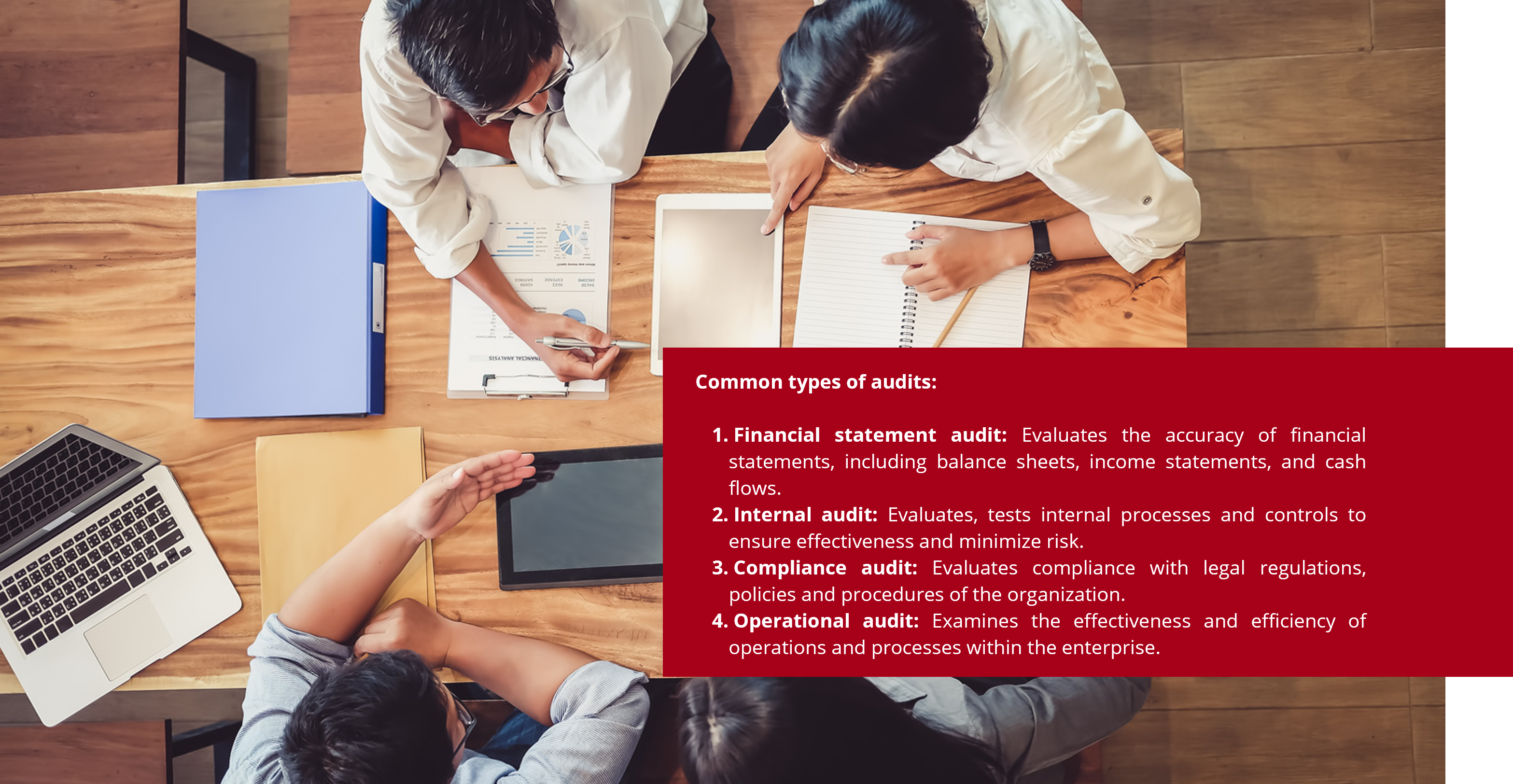
Auditing is the process of independent and systematic evaluation of the financial statements of a business or organization to determine their truthfulness, accuracy and legality. Auditing not only focuses on financial figures but also examines processes, internal control systems and compliance with legal regulations.
The main objective of auditing is to ensure that financial statements accurately reflect the financial situation of the business, helping stakeholders (such as investors, banks, shareholders, tax authorities) to make accurate decisions based on reliable information.
Auditing brings many important benefits to businesses, not only helping to ensure financial transparency but also helping to improve operational efficiency and reduce risks.

REASONS WHY DO BUSINESSES NEED AUDITING?
1. Ensuring transparency and reliability of financial statements
Auditing helps businesses verify that financial statements are presented accurately and fairly, reflecting the financial situation of the business. This is important for shareholders, investors, and other stakeholders.
2. Increase investor confidence
Investors and partners often rely on financial reports to make decisions. An independently audited financial report will increase investor confidence, making it easier for businesses to raise capital and build sustainable partnerships.
3. Improve efficiency and internal control
The audit process goes beyond just checking the numbers to evaluating a company’s internal control system. Auditors can uncover gaps in processes, helping companies improve financial management, protect assets, and reduce errors.
4. Ensure Legal Compliance
Businesses need to comply with many accounting, tax, and other laws and regulations. Auditing helps ensure that businesses comply with these regulations and avoid potential legal issues.
5. Reduce financial risks
Auditing helps detect errors, fraud, or improper financial activities. This helps businesses reduce financial risks and maintain long-term stability.
6. Improve business strategy
Auditing is not only about evaluating financial statements, but can also help businesses review their operating processes and strategies. Audit results can help the board of directors adjust strategies to achieve better efficiency, save costs, and increase profits.
7. Prepare for tax audits
When a business is audited by the tax authorities, audited financial statements will help the business demonstrate tax compliance and reduce the likelihood of being fined. The auditor will review tax returns and other financial obligations, helping to ensure that the business does not violate tax regulations.
8. Improve your ability to borrow money from banks
Banks and financial institutions often require audited financial statements to assess a business’s ability to borrow money. Having a transparent and accurate financial statement will help businesses easily access loans and improve their creditworthiness.

CONCLUSION
Auditing is an important tool for businesses to maintain financial transparency, ensure legal compliance, and improve operational efficiency. For businesses that want to develop sustainably, conducting periodic audits is not only a legal requirement but also a wise financial management strategy.


IFRS Auditing and Consulting Company Limited
The company provides a wide range of services such as audit of financial statements, tax advice, accounting services and valuation services with leading experts working in large auditing firms, multinational corporations


